




 English
 Arabic
 French
 Spanish
 Deutsch
 Turkish
 Dutch
Dutch
 Italiano
 Russian
 Romaian
 Portuguese (Brazil)
 Greek
Greek
Atualizações Recentes
-
High-Efficiency PV Modules Market Insights, Energy Yield Optimization 2035
https://www.wiseguyreports.com/reports/half-cut-solar-panel-market
As per Market Research Future, the High-Efficiency PV Modules
market is experiencing rapid expansion as global energy systems transition toward cleaner and more sustainable power sources. High-efficiency photovoltaic (PV) modules are designed to convert a greater percentage of sunlight into usable electricity, making them increasingly attractive for both small-scale and large-scale solar installations. With rising electricity demand and declining fossil fuel reliance, these advanced modules are becoming a cornerstone of modern renewable energy infrastructure.
The growing emphasis on maximizing energy generation within limited installation spaces is a major factor driving demand for high-efficiency PV modules. Urban areas, where rooftop space is often constrained, benefit significantly from panels capable of producing more power per square meter. Technologies such as monocrystalline silicon, PERC cells, TOPCon (Tunnel Oxide Passivated Contact), and heterojunction (HJT) cells have significantly improved module efficiency, pushing conversion rates to new heights.
Government policies and incentives are further accelerating adoption. Subsidies, tax credits, and net metering programs encourage homeowners and businesses to invest in high-performance solar solutions. Additionally, corporate sustainability commitments are prompting industries to adopt advanced PV modules to reduce carbon footprints and enhance energy resilience. As environmental regulations become stricter, high-efficiency modules provide a viable pathway to achieving compliance while maintaining profitability.
Technological innovation remains central to market growth. Manufacturers are investing heavily in research and development to improve cell architecture, minimize energy losses, and enhance durability. Advanced anti-reflective coatings, improved encapsulation materials, and smart module integration contribute to higher output and longer lifespan. Furthermore, the integration of digital monitoring systems allows real-time performance tracking, ensuring optimal energy management.
Utility-scale solar projects are increasingly incorporating high-efficiency modules to boost generation capacity and reduce land usage. In regions with high solar irradiance, these modules offer superior performance, enhancing overall plant productivity. Meanwhile, emerging markets are leveraging advanced PV technologies to accelerate rural electrification and grid expansion initiatives.
However, high-efficiency PV modules often come with higher upfront costs compared to standard panels. Despite this, declining manufacturing expenses and improved economies of scale are gradually narrowing the price gap. Over time, the enhanced energy output and long-term savings justify the initial investment, making these modules economically viable for a broad range of users.
The global market outlook remains positive, with continued innovation and policy support expected to drive steady growth. As the world intensifies efforts to combat climate change, high-efficiency PV modules will play an essential role in meeting renewable energy targets. Their ability to deliver maximum output with minimal space requirements ensures their relevance in both established and emerging markets.
FAQs
1. What makes a PV module high-efficiency?
High-efficiency modules use advanced cell technologies that convert a higher percentage of sunlight into electricity compared to conventional panels.
2. Are high-efficiency PV modules worth the cost?
Yes, despite higher initial costs, they provide greater energy output and long-term savings, improving overall return on investment.
3. Where are high-efficiency modules most commonly used?
They are widely used in residential rooftops, commercial buildings, and large-scale solar farms where maximizing power output is crucial.High-Efficiency PV Modules Market Insights, Energy Yield Optimization 2035 https://www.wiseguyreports.com/reports/half-cut-solar-panel-market As per Market Research Future, the High-Efficiency PV Modules market is experiencing rapid expansion as global energy systems transition toward cleaner and more sustainable power sources. High-efficiency photovoltaic (PV) modules are designed to convert a greater percentage of sunlight into usable electricity, making them increasingly attractive for both small-scale and large-scale solar installations. With rising electricity demand and declining fossil fuel reliance, these advanced modules are becoming a cornerstone of modern renewable energy infrastructure. The growing emphasis on maximizing energy generation within limited installation spaces is a major factor driving demand for high-efficiency PV modules. Urban areas, where rooftop space is often constrained, benefit significantly from panels capable of producing more power per square meter. Technologies such as monocrystalline silicon, PERC cells, TOPCon (Tunnel Oxide Passivated Contact), and heterojunction (HJT) cells have significantly improved module efficiency, pushing conversion rates to new heights. Government policies and incentives are further accelerating adoption. Subsidies, tax credits, and net metering programs encourage homeowners and businesses to invest in high-performance solar solutions. Additionally, corporate sustainability commitments are prompting industries to adopt advanced PV modules to reduce carbon footprints and enhance energy resilience. As environmental regulations become stricter, high-efficiency modules provide a viable pathway to achieving compliance while maintaining profitability. Technological innovation remains central to market growth. Manufacturers are investing heavily in research and development to improve cell architecture, minimize energy losses, and enhance durability. Advanced anti-reflective coatings, improved encapsulation materials, and smart module integration contribute to higher output and longer lifespan. Furthermore, the integration of digital monitoring systems allows real-time performance tracking, ensuring optimal energy management. Utility-scale solar projects are increasingly incorporating high-efficiency modules to boost generation capacity and reduce land usage. In regions with high solar irradiance, these modules offer superior performance, enhancing overall plant productivity. Meanwhile, emerging markets are leveraging advanced PV technologies to accelerate rural electrification and grid expansion initiatives. However, high-efficiency PV modules often come with higher upfront costs compared to standard panels. Despite this, declining manufacturing expenses and improved economies of scale are gradually narrowing the price gap. Over time, the enhanced energy output and long-term savings justify the initial investment, making these modules economically viable for a broad range of users. The global market outlook remains positive, with continued innovation and policy support expected to drive steady growth. As the world intensifies efforts to combat climate change, high-efficiency PV modules will play an essential role in meeting renewable energy targets. Their ability to deliver maximum output with minimal space requirements ensures their relevance in both established and emerging markets. FAQs 1. What makes a PV module high-efficiency? High-efficiency modules use advanced cell technologies that convert a higher percentage of sunlight into electricity compared to conventional panels. 2. Are high-efficiency PV modules worth the cost? Yes, despite higher initial costs, they provide greater energy output and long-term savings, improving overall return on investment. 3. Where are high-efficiency modules most commonly used? They are widely used in residential rooftops, commercial buildings, and large-scale solar farms where maximizing power output is crucial.0 Comentários 0 Compartilhamentos 1K Visualizações 0 Anterior -
Used Battery Recycling Materials Market Insights, Secondary Raw Materials 2035
https://www.marketresearchfuture.com/reports/battery-scarp-market-25210
As per Market Research Future, the Used Battery Recycling Materials
sector is experiencing rapid growth due to increasing battery consumption and the urgent need for sustainable resource management. The global shift toward electrification, renewable energy storage, and portable electronics has significantly raised the volume of spent batteries, creating a strong demand for efficient recycling systems.
Used batteries contain valuable and reusable materials such as lithium, cobalt, nickel, manganese, lead, aluminum, and copper. Recycling these components not only conserves finite natural resources but also reduces the environmental burden associated with mining and raw material extraction. The recovery of these materials supports the circular economy by reintroducing them into manufacturing supply chains.
Lithium-ion batteries represent a major segment within used battery recycling. Commonly found in electric vehicles, smartphones, laptops, and energy storage systems, these batteries require specialized recycling processes. Advanced methods such as hydrometallurgical extraction enable high recovery rates of critical metals while minimizing hazardous emissions. These processes are becoming increasingly cost-effective as technology improves.
Lead-acid batteries, widely used in automotive and industrial applications, have one of the highest recycling rates globally. Lead is highly recyclable without significant degradation in quality, making it economically viable for reuse. Recovered lead is often used in the production of new batteries, reducing the need for primary lead mining.
Government regulations and environmental policies are major catalysts for industry growth. Many countries have implemented extended producer responsibility (EPR) programs, requiring manufacturers to manage the collection and recycling of used batteries. These frameworks encourage investment in recycling infrastructure and promote responsible disposal practices among consumers.
The rise of renewable energy systems is also contributing to increased recycling demand. Solar and wind power installations rely heavily on battery storage solutions. As these systems age, recycling will become essential to handle end-of-life batteries sustainably. Efficient recycling ensures that critical materials remain available for future renewable energy projects.
Economic benefits further strengthen the recycling materials market. Recovering metals from used batteries often costs less than extracting new raw materials. Additionally, recycling reduces dependency on geopolitically sensitive mining regions, enhancing supply chain stability.
Despite strong growth prospects, challenges remain. Complex battery chemistries, lack of standardized designs, and collection inefficiencies can hinder recycling efficiency. However, industry players are investing in research and development to overcome these barriers. Innovations in automated disassembly and material separation technologies are improving scalability and profitability.
In the coming years, increased consumer awareness and corporate sustainability commitments are expected to accelerate the adoption of battery recycling programs. As industries continue transitioning toward electrification and clean energy, used battery recycling materials will play a crucial role in supporting sustainable industrial development.
FAQs
1. Why are used battery recycling materials important?
They help conserve natural resources, reduce environmental pollution, and support the circular economy by reusing valuable metals.
2. Which industries benefit most from battery recycling?
Automotive, consumer electronics, renewable energy storage, and industrial manufacturing sectors benefit significantly.
3. What challenges exist in battery recycling?
Challenges include complex battery designs, high collection costs, and the need for advanced processing technologies to ensure efficient material recovery.Used Battery Recycling Materials Market Insights, Secondary Raw Materials 2035 https://www.marketresearchfuture.com/reports/battery-scarp-market-25210 As per Market Research Future, the Used Battery Recycling Materials sector is experiencing rapid growth due to increasing battery consumption and the urgent need for sustainable resource management. The global shift toward electrification, renewable energy storage, and portable electronics has significantly raised the volume of spent batteries, creating a strong demand for efficient recycling systems. Used batteries contain valuable and reusable materials such as lithium, cobalt, nickel, manganese, lead, aluminum, and copper. Recycling these components not only conserves finite natural resources but also reduces the environmental burden associated with mining and raw material extraction. The recovery of these materials supports the circular economy by reintroducing them into manufacturing supply chains. Lithium-ion batteries represent a major segment within used battery recycling. Commonly found in electric vehicles, smartphones, laptops, and energy storage systems, these batteries require specialized recycling processes. Advanced methods such as hydrometallurgical extraction enable high recovery rates of critical metals while minimizing hazardous emissions. These processes are becoming increasingly cost-effective as technology improves. Lead-acid batteries, widely used in automotive and industrial applications, have one of the highest recycling rates globally. Lead is highly recyclable without significant degradation in quality, making it economically viable for reuse. Recovered lead is often used in the production of new batteries, reducing the need for primary lead mining. Government regulations and environmental policies are major catalysts for industry growth. Many countries have implemented extended producer responsibility (EPR) programs, requiring manufacturers to manage the collection and recycling of used batteries. These frameworks encourage investment in recycling infrastructure and promote responsible disposal practices among consumers. The rise of renewable energy systems is also contributing to increased recycling demand. Solar and wind power installations rely heavily on battery storage solutions. As these systems age, recycling will become essential to handle end-of-life batteries sustainably. Efficient recycling ensures that critical materials remain available for future renewable energy projects. Economic benefits further strengthen the recycling materials market. Recovering metals from used batteries often costs less than extracting new raw materials. Additionally, recycling reduces dependency on geopolitically sensitive mining regions, enhancing supply chain stability. Despite strong growth prospects, challenges remain. Complex battery chemistries, lack of standardized designs, and collection inefficiencies can hinder recycling efficiency. However, industry players are investing in research and development to overcome these barriers. Innovations in automated disassembly and material separation technologies are improving scalability and profitability. In the coming years, increased consumer awareness and corporate sustainability commitments are expected to accelerate the adoption of battery recycling programs. As industries continue transitioning toward electrification and clean energy, used battery recycling materials will play a crucial role in supporting sustainable industrial development. FAQs 1. Why are used battery recycling materials important? They help conserve natural resources, reduce environmental pollution, and support the circular economy by reusing valuable metals. 2. Which industries benefit most from battery recycling? Automotive, consumer electronics, renewable energy storage, and industrial manufacturing sectors benefit significantly. 3. What challenges exist in battery recycling? Challenges include complex battery designs, high collection costs, and the need for advanced processing technologies to ensure efficient material recovery.0 Comentários 0 Compartilhamentos 832 Visualizações 0 Anterior -
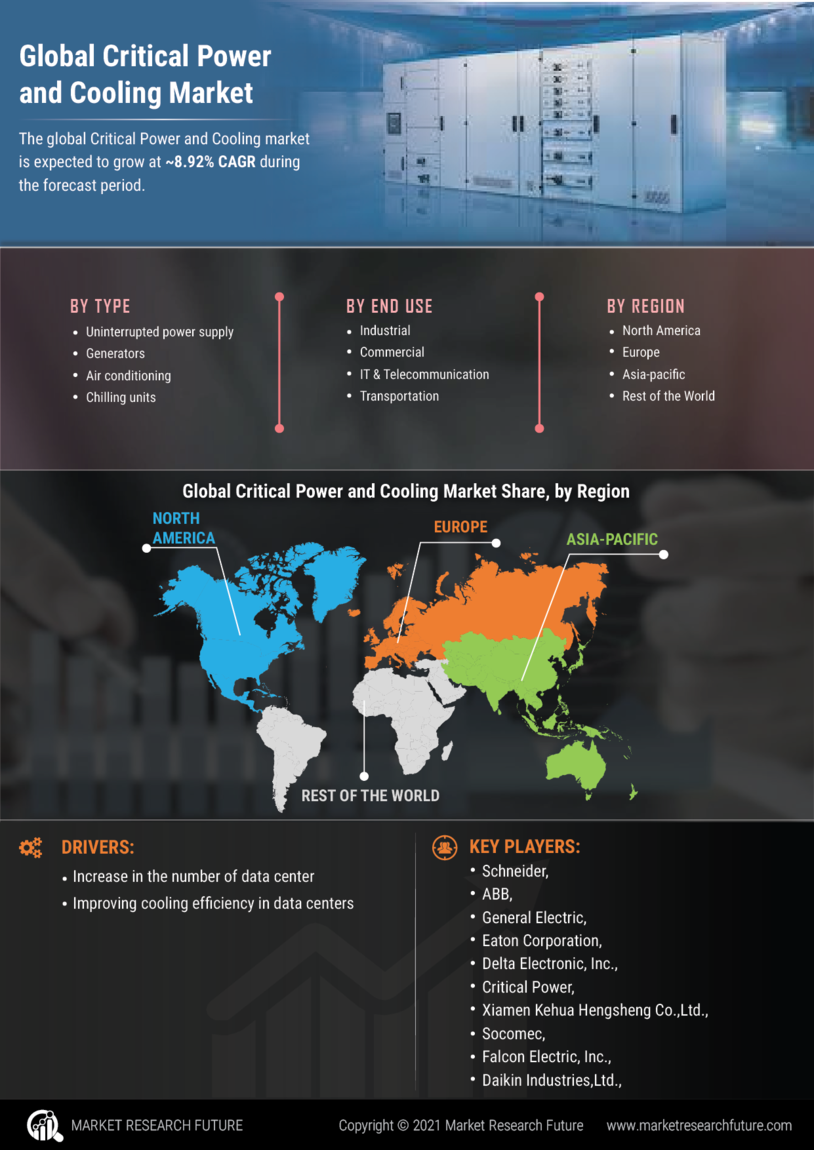
Data Center Power Solutions Market Insights, UPS and Backup Systems 2035
https://www.marketresearchfuture.com/reports/critical-power-cooling-market-2473
As per Market Research Future, the Data Center Power Solutions market is experiencing robust growth as organizations increasingly depend on digital infrastructure to support business operations. Data centers serve as the core of modern IT ecosystems, hosting cloud platforms, enterprise applications, and digital services. Ensuring uninterrupted and high-quality power supply is essential for maintaining operational resilience and minimizing downtime.
Data center power solutions encompass uninterruptible power supply (UPS) systems, generators, switchgear, power distribution units (PDUs), busways, and backup battery systems. These components work together to provide stable electricity, protect against voltage fluctuations, and ensure redundancy in case of grid failure. As downtime can result in significant financial losses and reputational damage, enterprises are prioritizing resilient power architectures.
The rapid growth of cloud computing, 5G networks, and AI-driven applications is significantly influencing market expansion. Hyperscale and colocation data centers require scalable and modular power solutions capable of handling fluctuating loads. Additionally, the proliferation of edge data centers has increased demand for compact and energy-efficient power systems that can operate in distributed environments.
Sustainability is another major factor shaping the data center power solutions market. Operators are focusing on reducing carbon emissions and improving energy efficiency. Advanced UPS systems with higher efficiency ratings and lithium-ion battery technologies are replacing traditional lead-acid batteries. Renewable energy integration, such as solar and wind power, is also becoming more common, requiring sophisticated power management systems to balance loads and ensure reliability.
Technological advancements are transforming the industry landscape. Intelligent power monitoring systems now provide real-time analytics, enabling predictive maintenance and improved asset utilization. Automation and digital twin technologies help optimize energy consumption and enhance operational visibility. These innovations contribute to reduced operating expenses and improved service reliability.
North America remains a dominant market due to significant investments in hyperscale data centers and advanced IT infrastructure. Europe is witnessing strong growth supported by energy efficiency regulations and green energy initiatives. The Asia-Pacific region, particularly India and China, is emerging as a high-growth market fueled by digital transformation, expanding internet usage, and government-backed digital infrastructure programs.
Despite promising growth, challenges such as high capital expenditure, power density management, and regulatory compliance remain key considerations. However, ongoing technological innovations and the rising demand for digital services are expected to sustain long-term growth momentum.
In the coming years, modular, scalable, and energy-efficient power solutions will gain prominence. Vendors offering integrated systems with advanced monitoring capabilities and renewable energy compatibility are well-positioned to capture market share. As digital ecosystems expand and data consumption continues to rise, reliable data center power solutions will remain critical to business continuity.
FAQs
What are data center power solutions?
They are systems such as UPS units, generators, PDUs, and batteries that ensure continuous and stable power supply to data center infrastructure.
Why is energy efficiency important in data center power systems?
Energy-efficient systems reduce operational costs, minimize carbon emissions, and improve overall sustainability.
Which trends are shaping the market?
Key trends include modular power architectures, lithium-ion battery adoption, renewable energy integration, and intelligent monitoring systems.Data Center Power Solutions Market Insights, UPS and Backup Systems 2035 https://www.marketresearchfuture.com/reports/critical-power-cooling-market-2473 As per Market Research Future, the Data Center Power Solutions market is experiencing robust growth as organizations increasingly depend on digital infrastructure to support business operations. Data centers serve as the core of modern IT ecosystems, hosting cloud platforms, enterprise applications, and digital services. Ensuring uninterrupted and high-quality power supply is essential for maintaining operational resilience and minimizing downtime. Data center power solutions encompass uninterruptible power supply (UPS) systems, generators, switchgear, power distribution units (PDUs), busways, and backup battery systems. These components work together to provide stable electricity, protect against voltage fluctuations, and ensure redundancy in case of grid failure. As downtime can result in significant financial losses and reputational damage, enterprises are prioritizing resilient power architectures. The rapid growth of cloud computing, 5G networks, and AI-driven applications is significantly influencing market expansion. Hyperscale and colocation data centers require scalable and modular power solutions capable of handling fluctuating loads. Additionally, the proliferation of edge data centers has increased demand for compact and energy-efficient power systems that can operate in distributed environments. Sustainability is another major factor shaping the data center power solutions market. Operators are focusing on reducing carbon emissions and improving energy efficiency. Advanced UPS systems with higher efficiency ratings and lithium-ion battery technologies are replacing traditional lead-acid batteries. Renewable energy integration, such as solar and wind power, is also becoming more common, requiring sophisticated power management systems to balance loads and ensure reliability. Technological advancements are transforming the industry landscape. Intelligent power monitoring systems now provide real-time analytics, enabling predictive maintenance and improved asset utilization. Automation and digital twin technologies help optimize energy consumption and enhance operational visibility. These innovations contribute to reduced operating expenses and improved service reliability. North America remains a dominant market due to significant investments in hyperscale data centers and advanced IT infrastructure. Europe is witnessing strong growth supported by energy efficiency regulations and green energy initiatives. The Asia-Pacific region, particularly India and China, is emerging as a high-growth market fueled by digital transformation, expanding internet usage, and government-backed digital infrastructure programs. Despite promising growth, challenges such as high capital expenditure, power density management, and regulatory compliance remain key considerations. However, ongoing technological innovations and the rising demand for digital services are expected to sustain long-term growth momentum. In the coming years, modular, scalable, and energy-efficient power solutions will gain prominence. Vendors offering integrated systems with advanced monitoring capabilities and renewable energy compatibility are well-positioned to capture market share. As digital ecosystems expand and data consumption continues to rise, reliable data center power solutions will remain critical to business continuity. FAQs What are data center power solutions? They are systems such as UPS units, generators, PDUs, and batteries that ensure continuous and stable power supply to data center infrastructure. Why is energy efficiency important in data center power systems? Energy-efficient systems reduce operational costs, minimize carbon emissions, and improve overall sustainability. Which trends are shaping the market? Key trends include modular power architectures, lithium-ion battery adoption, renewable energy integration, and intelligent monitoring systems.0 Comentários 0 Compartilhamentos 1K Visualizações 0 Anterior -
Gas Storage Caverns and Reservoirs Market Insights, Salt Dome Projects 2035
https://www.marketresearchfuture.com/reports/underground-natural-gas-storage-market-10944
As per Market Research Future, the Gas Storage Caverns and Reservoirs segment is witnessing notable growth as energy markets demand greater operational flexibility and long-term supply assurance. Gas storage caverns and reservoirs form the backbone of underground storage infrastructure, enabling countries to manage seasonal fluctuations and unexpected disruptions effectively.
Gas storage caverns, particularly those developed in salt formations, are engineered by solution mining techniques that create hollow spaces deep underground. These caverns offer rapid injection and withdrawal rates, making them ideal for short-term balancing and emergency supply. Their structural integrity and low permeability minimize gas losses and enhance safety.
On the other hand, depleted oil and gas reservoirs are repurposed for storage once production declines. These reservoirs are well-understood geologically and often connected to existing pipeline networks, reducing development costs. Their large capacity makes them suitable for long-term and seasonal storage applications. Aquifer-based storage, though less common, is utilized where natural geological conditions allow secure containment.
The growth of gas storage caverns and reservoirs is closely linked to rising global natural gas consumption. As industries, power plants, and households increasingly rely on gas for heating and electricity, maintaining sufficient reserves becomes critical. Storage facilities allow operators to purchase gas during low-price periods and store it for later use, optimizing economic efficiency.
Energy security concerns are another major growth driver. Geopolitical tensions, supply chain disruptions, and extreme weather events have underscored the importance of domestic storage capacity. Governments are investing in expanding and modernizing storage infrastructure to reduce vulnerability and ensure continuity of supply.
Technological innovation is improving operational performance across storage types. Advanced seismic imaging and reservoir simulation tools enhance site selection and capacity estimation. Automated pressure control systems and leak detection technologies improve safety standards. Data-driven optimization enables better scheduling of injection and withdrawal cycles, maximizing facility utilization.
Environmental and regulatory compliance plays a vital role in shaping the market. Strict monitoring protocols are implemented to prevent methane emissions and protect groundwater resources. Many operators are integrating carbon management practices and exploring the feasibility of storing alternative gases such as hydrogen in existing caverns and reservoirs.
Regionally, North America leads in storage cavern development due to favorable geology and established gas markets. Europe is expanding reservoir-based storage to strengthen energy independence, while Asia-Pacific is investing in new facilities to support LNG import growth and rising domestic consumption.
The outlook for gas storage caverns and reservoirs remains positive as global energy systems transition toward cleaner and more flexible solutions. These underground assets will continue to serve as strategic infrastructure, supporting stable supply and market resilience.
FAQs
1. What is the difference between caverns and reservoirs?
Caverns are engineered spaces in salt formations with high deliverability, while reservoirs are depleted oil or gas fields used for large-capacity storage.
2. Why are salt caverns preferred for short-term storage?
Salt caverns allow rapid gas injection and withdrawal, making them suitable for peak demand and emergency applications.
3. Can these facilities store other gases besides natural gas?
Yes, research is ongoing to adapt storage caverns and reservoirs for hydrogen and renewable gases.Gas Storage Caverns and Reservoirs Market Insights, Salt Dome Projects 2035 https://www.marketresearchfuture.com/reports/underground-natural-gas-storage-market-10944 As per Market Research Future, the Gas Storage Caverns and Reservoirs segment is witnessing notable growth as energy markets demand greater operational flexibility and long-term supply assurance. Gas storage caverns and reservoirs form the backbone of underground storage infrastructure, enabling countries to manage seasonal fluctuations and unexpected disruptions effectively. Gas storage caverns, particularly those developed in salt formations, are engineered by solution mining techniques that create hollow spaces deep underground. These caverns offer rapid injection and withdrawal rates, making them ideal for short-term balancing and emergency supply. Their structural integrity and low permeability minimize gas losses and enhance safety. On the other hand, depleted oil and gas reservoirs are repurposed for storage once production declines. These reservoirs are well-understood geologically and often connected to existing pipeline networks, reducing development costs. Their large capacity makes them suitable for long-term and seasonal storage applications. Aquifer-based storage, though less common, is utilized where natural geological conditions allow secure containment. The growth of gas storage caverns and reservoirs is closely linked to rising global natural gas consumption. As industries, power plants, and households increasingly rely on gas for heating and electricity, maintaining sufficient reserves becomes critical. Storage facilities allow operators to purchase gas during low-price periods and store it for later use, optimizing economic efficiency. Energy security concerns are another major growth driver. Geopolitical tensions, supply chain disruptions, and extreme weather events have underscored the importance of domestic storage capacity. Governments are investing in expanding and modernizing storage infrastructure to reduce vulnerability and ensure continuity of supply. Technological innovation is improving operational performance across storage types. Advanced seismic imaging and reservoir simulation tools enhance site selection and capacity estimation. Automated pressure control systems and leak detection technologies improve safety standards. Data-driven optimization enables better scheduling of injection and withdrawal cycles, maximizing facility utilization. Environmental and regulatory compliance plays a vital role in shaping the market. Strict monitoring protocols are implemented to prevent methane emissions and protect groundwater resources. Many operators are integrating carbon management practices and exploring the feasibility of storing alternative gases such as hydrogen in existing caverns and reservoirs. Regionally, North America leads in storage cavern development due to favorable geology and established gas markets. Europe is expanding reservoir-based storage to strengthen energy independence, while Asia-Pacific is investing in new facilities to support LNG import growth and rising domestic consumption. The outlook for gas storage caverns and reservoirs remains positive as global energy systems transition toward cleaner and more flexible solutions. These underground assets will continue to serve as strategic infrastructure, supporting stable supply and market resilience. FAQs 1. What is the difference between caverns and reservoirs? Caverns are engineered spaces in salt formations with high deliverability, while reservoirs are depleted oil or gas fields used for large-capacity storage. 2. Why are salt caverns preferred for short-term storage? Salt caverns allow rapid gas injection and withdrawal, making them suitable for peak demand and emergency applications. 3. Can these facilities store other gases besides natural gas? Yes, research is ongoing to adapt storage caverns and reservoirs for hydrogen and renewable gases.0 Comentários 0 Compartilhamentos 886 Visualizações 0 Anterior -
Mobile Gas Station Market Analysis 2035: On-Site Fueling Services & Logistics Industry Expansion
https://www.wiseguyreports.com/reports/mobile-gas-station-market
The Mobile Gas Station Market is gaining traction as on-demand fuel delivery services transform traditional fueling models. Mobile gas stations provide fuel directly to customers’ locations, eliminating the need for drivers to visit conventional fueling stations. This innovative approach is reshaping fuel distribution logistics and enhancing consumer convenience.
The growing demand for time-saving services is a primary driver of market growth. Businesses with vehicle fleets, such as logistics companies and construction firms, benefit from mobile fueling by reducing downtime and improving operational efficiency. Individual consumers also appreciate the convenience of doorstep refueling, especially in urban areas with heavy traffic.
Technological integration plays a significant role in this market’s expansion. Mobile apps enable customers to schedule fuel deliveries, track service status, and process digital payments. GPS-enabled tanker trucks ensure optimized route planning and efficient service coverage. These technological features enhance transparency and reliability.
Environmental and safety considerations are also influencing market dynamics. Mobile fueling providers must comply with stringent regulations regarding fuel storage, transportation, and dispensing. Advanced containment systems and real-time monitoring technologies are helping companies maintain safety standards while minimizing environmental risks.
North America leads the mobile gas station market due to early adoption of on-demand services and supportive regulatory frameworks. Europe is witnessing steady growth, driven by fleet management solutions and sustainability initiatives. Emerging markets in Asia-Pacific are gradually exploring mobile fueling models as urbanization increases.
Challenges include regulatory complexities and initial capital investment requirements. However, the convenience factor and efficiency gains are expected to drive continued market adoption.
FAQs
What is a mobile gas station?
It is a service that delivers fuel directly to customers’ vehicles at their chosen location.
Who benefits most from mobile fueling?
Fleet operators, logistics companies, and busy urban consumers benefit significantly from reduced downtime and convenience.
What challenges does the market face?
Regulatory compliance, safety standards, and infrastructure investment are key challenges in this evolving industry.Mobile Gas Station Market Analysis 2035: On-Site Fueling Services & Logistics Industry Expansion https://www.wiseguyreports.com/reports/mobile-gas-station-market The Mobile Gas Station Market is gaining traction as on-demand fuel delivery services transform traditional fueling models. Mobile gas stations provide fuel directly to customers’ locations, eliminating the need for drivers to visit conventional fueling stations. This innovative approach is reshaping fuel distribution logistics and enhancing consumer convenience. The growing demand for time-saving services is a primary driver of market growth. Businesses with vehicle fleets, such as logistics companies and construction firms, benefit from mobile fueling by reducing downtime and improving operational efficiency. Individual consumers also appreciate the convenience of doorstep refueling, especially in urban areas with heavy traffic. Technological integration plays a significant role in this market’s expansion. Mobile apps enable customers to schedule fuel deliveries, track service status, and process digital payments. GPS-enabled tanker trucks ensure optimized route planning and efficient service coverage. These technological features enhance transparency and reliability. Environmental and safety considerations are also influencing market dynamics. Mobile fueling providers must comply with stringent regulations regarding fuel storage, transportation, and dispensing. Advanced containment systems and real-time monitoring technologies are helping companies maintain safety standards while minimizing environmental risks. North America leads the mobile gas station market due to early adoption of on-demand services and supportive regulatory frameworks. Europe is witnessing steady growth, driven by fleet management solutions and sustainability initiatives. Emerging markets in Asia-Pacific are gradually exploring mobile fueling models as urbanization increases. Challenges include regulatory complexities and initial capital investment requirements. However, the convenience factor and efficiency gains are expected to drive continued market adoption. FAQs What is a mobile gas station? It is a service that delivers fuel directly to customers’ vehicles at their chosen location. Who benefits most from mobile fueling? Fleet operators, logistics companies, and busy urban consumers benefit significantly from reduced downtime and convenience. What challenges does the market face? Regulatory compliance, safety standards, and infrastructure investment are key challenges in this evolving industry.0 Comentários 0 Compartilhamentos 928 Visualizações 0 Anterior -
Lithium Ion Solar Battery Market Outlook 2035: Renewable Storage Growth, Efficiency Trends & Market Expansion
https://www.wiseguyreports.com/reports/lithium-ion-solar-battery-market
As per Market Research Future, the Lithium Ion Solar Battery Market is witnessing rapid expansion due to the global shift toward renewable energy and energy storage solutions. Lithium-ion solar batteries are widely used to store energy generated by solar panels, enabling reliable power supply even during non-sunny hours.
The rising adoption of rooftop solar installations in residential and commercial sectors significantly drives market growth. Energy storage systems enhance energy independence and reduce reliance on grid electricity. Lithium-ion batteries offer high energy density, longer lifecycle, faster charging capability, and lower maintenance compared to traditional lead-acid batteries.
Government incentives and supportive renewable energy policies further strengthen market expansion. Many countries are promoting solar-plus-storage systems to improve grid stability and encourage clean energy adoption. Declining battery prices due to advancements in manufacturing technology also enhance affordability.
Technological innovation remains central to market growth. Improvements in battery management systems (BMS), enhanced safety mechanisms, and increased cycle life are boosting consumer confidence. Integration with smart energy management platforms allows real-time monitoring and efficient energy usage.
Regionally, Asia-Pacific leads the Lithium Ion Solar Battery Market due to strong solar adoption in China, India, Japan, and Australia. North America and Europe also show significant growth supported by residential solar incentives and sustainability initiatives.
Despite strong growth, challenges include raw material supply constraints and recycling concerns. However, ongoing research in battery recycling and alternative chemistries is expected to address these issues over time.
In conclusion, the Lithium Ion Solar Battery Market is poised for substantial growth as renewable energy adoption accelerates globally. Continuous technological advancements and supportive policies will remain key factors shaping the market’s future.
FAQs
Why are lithium-ion batteries preferred for solar storage?
They offer higher energy density, longer lifespan, and better efficiency compared to traditional battery technologies.
What factors drive the Lithium Ion Solar Battery Market?
Rising solar installations, government incentives, and technological advancements are major growth drivers.
Are lithium-ion solar batteries environmentally friendly?
They support clean energy adoption, and ongoing recycling innovations aim to further reduce environmental impact.Lithium Ion Solar Battery Market Outlook 2035: Renewable Storage Growth, Efficiency Trends & Market Expansion https://www.wiseguyreports.com/reports/lithium-ion-solar-battery-market As per Market Research Future, the Lithium Ion Solar Battery Market is witnessing rapid expansion due to the global shift toward renewable energy and energy storage solutions. Lithium-ion solar batteries are widely used to store energy generated by solar panels, enabling reliable power supply even during non-sunny hours. The rising adoption of rooftop solar installations in residential and commercial sectors significantly drives market growth. Energy storage systems enhance energy independence and reduce reliance on grid electricity. Lithium-ion batteries offer high energy density, longer lifecycle, faster charging capability, and lower maintenance compared to traditional lead-acid batteries. Government incentives and supportive renewable energy policies further strengthen market expansion. Many countries are promoting solar-plus-storage systems to improve grid stability and encourage clean energy adoption. Declining battery prices due to advancements in manufacturing technology also enhance affordability. Technological innovation remains central to market growth. Improvements in battery management systems (BMS), enhanced safety mechanisms, and increased cycle life are boosting consumer confidence. Integration with smart energy management platforms allows real-time monitoring and efficient energy usage. Regionally, Asia-Pacific leads the Lithium Ion Solar Battery Market due to strong solar adoption in China, India, Japan, and Australia. North America and Europe also show significant growth supported by residential solar incentives and sustainability initiatives. Despite strong growth, challenges include raw material supply constraints and recycling concerns. However, ongoing research in battery recycling and alternative chemistries is expected to address these issues over time. In conclusion, the Lithium Ion Solar Battery Market is poised for substantial growth as renewable energy adoption accelerates globally. Continuous technological advancements and supportive policies will remain key factors shaping the market’s future. FAQs Why are lithium-ion batteries preferred for solar storage? They offer higher energy density, longer lifespan, and better efficiency compared to traditional battery technologies. What factors drive the Lithium Ion Solar Battery Market? Rising solar installations, government incentives, and technological advancements are major growth drivers. Are lithium-ion solar batteries environmentally friendly? They support clean energy adoption, and ongoing recycling innovations aim to further reduce environmental impact.0 Comentários 0 Compartilhamentos 871 Visualizações 0 Anterior
.png)

Mais Stories